Black Joy as Cultural Resistance
On Celebration and Visibility in When We See Us
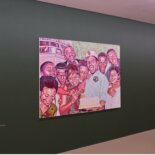
The exhibition When We See Us at the Kunstmuseum Basel celebrates a century of Black figurative painting, offering a sweeping homage to Black Joy, positioned far beyond the aestheticized trauma and stereotyped suffering so often imposed upon Black subjects in European cultural institutions. More than a collection of artworks, the exhibition offers a curatorial and affective experience: an invitation to encounter joy as a force of resistance, intimacy, and self-definition. The title, When We See Us, a deliberate echo of Ava DuVernay’s When They See Us, already signals a reversal of gaze. Where they cast their vision upon Black life, this exhibition turns the lens inward: when we see us is both an epistemic act and a political claim. It is a reorientation of visual sovereignty. Curated by Tandazani Dhlakama and Koyo Kouoh, the exhibition brings together over 200 works by artists from across the Pan-African and diasporic spectrum, mapping 100 years of Black figuration through scenes of leisure, love, spirituality, domesticity, and collective rest. The exhibition is not the representation of Blackness as absence, brokenness, or spectacle. Rather, it is what Stuart Hall would call a “politics of representation” that insists on multiplicity, affect, and self-making. [1] Black Joy, in this exhibition, is not treated as an emotion alone but as a methodology, a visual grammar of presence, survival, and imagination. Drawing on Hall, we might say this is not about “finding the real” but about showing how identity is constructed, felt, and claimed in the act of celebration itself. [2] The exhibition’s refusal to center trauma resonates deeply with bell hooks’ call for an “oppositional gaze:” a way of seeing that resists dominance and reclaims the terms of looking. [3] Here, the gaze is not merely returned, it is shared. One sees and is seen. This mutuality is enacted not just through portraiture but through the spatial choreography of the exhibition: vibrant color palettes, layered listening zones, moments of stillness, and warmth. In such an environment, joy is not a frivolous affect but a quiet demand, a mode of staying alive and staying seen. As a biracial cultural researcher working at the intersection of visual studies, digital ethnography, and urban Black cultural spaces, I approached the show not only as an observer but also as someone deeply attuned to the textures and politics of Black self-representation. My viewing was not neutral. It was embodied, relational, charged. Moving through…