Las Fiestas against Displacement
Religious Celebrations as Socio-Territorial Resistance in San Andrés Cholula, Mexico


_Introduction
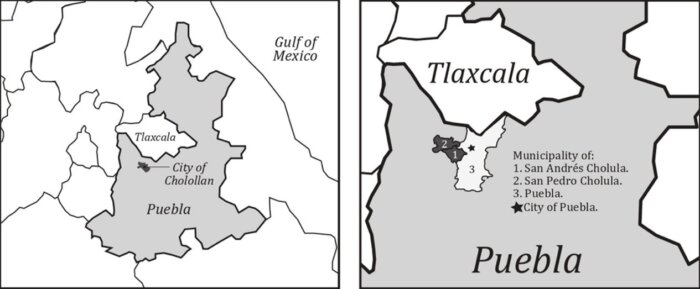
The pre-Hispanic city of Cholula was an important religious center for the cultures of Mesoamerica. The settlement under discussion was located in the territory that comprises the municipalities of San Andrés Cholula and San Pedro Cholula in the state of Puebla, within the Central Highlands of Mexico. It is claimed that in Cholula there are three hundred sixty-five churches, one for each day of the year. Despite the absence of empirical evidence, this legend constitutes a component of the collective imagination of contemporary Cholula, wherein the Indigenous population safeguards its profound cultural and spiritual heritage through religious festivities dedicated to the patron saints of Catholicism.
The religious syncretism that characterizes these celebrations has its roots in the 16th century, when the Conquest and the evangelization imposed by the Spaniards transformed Indigenous ritual expressions. In this process, a significant number of pre-Hispanic practices were adapted to Christian traditions, leading to the development of religious customs that have persisted to the present day. While these traditions may be problematized for perpetuating a neocolonial logic that maintains symbolic structures of domination, in Cholula they have also become important practices of social and cultural resistance. Consequently, this research aligns with scholars such as Homi Bhabha in understanding hybridity as a relational process, wherein syncretism is conceptualized as the ‘in-between’ space where new identities emerge and shape societies. [1]
The objective of this _Article is to examine how las fiestas religiosas [religious celebrations], particularly those organized by the traditional neighborhoods of the municipality of San Andrés Cholula, function as an active form of appropriation of public space and as a strategy of territorial continuity and collective permanence in the face of gentrification and displacement. A case study of three festivities—Christmas Day, the Candlemas of the Parish of San Andrés Apóstol, and the celebration of the patron saint of the traditional neighborhood of Santiago Xicotenco—was conducted to explore how these rituals serve as a tool for the political and communal legitimization of native peoples.
In this context, the present work acknowledges ritual as a performative practice through which social order is reproduced and negotiated. [2] The persistence of religious celebrations in San Andrés Cholula cannot be reduced to cultural continuity alone, rather it must be understood as a situated practice that actively produces meaning, belonging, and social authority. Accordingly, scholars of urban indigeneity, such as Renya Ramírez, have explained how Indigenous communities actively negotiate urban contexts, maintaining a balance between their identity and governance. [3]
The _Article also acknowledges the scholarly criticism surrounding the problematic relationship between culture and gentrification. As discussed by scholars such as Sharon Zukin, cultural practices have the potential to enhance the attractiveness of an urban area and accelerate processes of displacement. [4] It is imperative to emphasize that the present study does not assert an immune status of religious celebrations with respect to commodification.
Instead, it posits that the internal organization in San Andrés Cholula, grounded in neighborhood structures known as the mayordomías, functions on the basis of communal principles that differ fundamentally from market-oriented cultural production, which is susceptible to monopoly rent. [5] Following Appadurai, what can be observed in San Andrés Cholula is a grassroots socio-urban structure, intricately woven into local political dynamics and symbolic hierarchies, through which communities sustain forms of collective organization and territorial belonging. [6]
Finally, a multidisciplinary theoretical framework is employed to analyze religious celebrations in San Andrés Cholula, drawing from anthropology [7], sociology [8], urban studies [9], and critical geography [10]. Rather than perceiving these practices as static traditions or mere remnants of the past, this research conceptualizes religious festivities as dynamic social practices embedded in power relations, territorial struggles, and processes of urban transformation.
_Methodology
The present study is grounded in qualitative research methodologies, incorporating long-term ethnographic participation, participant observation, document analysis, and semi-structured interviews. The fieldwork was conducted over an extended period, from 2017 to 2024, through recurrent visits to San Andrés Cholula, with intensive observation during major religious celebrations, such as Christmas (December), Candlemas (December–February), and the patron saint festivities of Santiago Xicotenco (July).
The author’s involvement in these events was facilitated by sustained communication with members of the Xicale family since 2017. This Indigenous family has a long tradition and actively participates in the religious and political life of San Andrés Cholula. Their active engagement in the mayordomías and municipal affairs offered a distinctive vantage point from which to observe the nexus between religious organization and the perpetuation of political continuity. The researcher’s participation in the events as an invited guest enabled observation of both the public ritual performances and the internal preparatory processes.
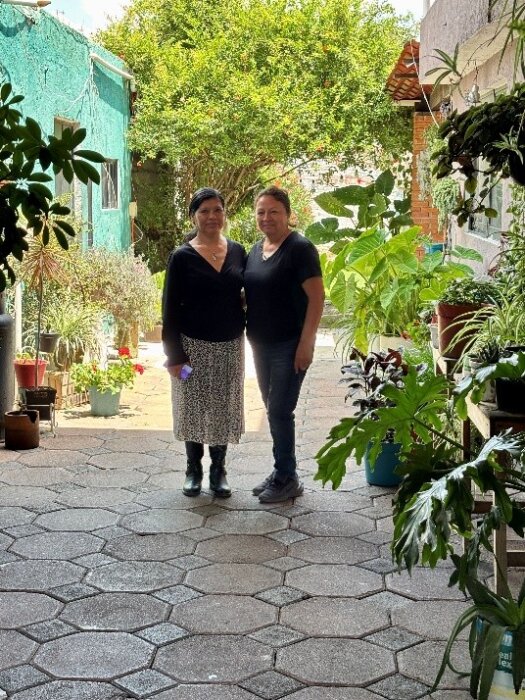
A substantial portion of the understanding of the interrelation between religious festivities and political structures was derived from informal, open-ended dialogues with members of the Xicale family: Maribel Xicale Coyotl, Georgina Xicali Coyotl, María Flor Coatl Cuautle and Roberto Maxil Coyopotl. All are native residents of San Andrés Cholula and active participants in community life. [11] All interviewees provided informed consent for their participation and agreed to be identified by name in this publication.
Maribel Xicale’s professional background includes her service as Director of the municipal DIF System for the Integral Development of the Family, a position she held as spouse of the municipal president during the administration of Omar E. Coyopol Solis (2005–2008). Furthermore, she has engaged in various political activities in San Andrés Cholula since 2024. Georgina Xicali Coyotl’s place of residence is in the San Juan Aquiahuac neighborhood, where she occupies a property inherited from her mother. Her primary commitments are to domestic work and household care. María Flor Coatl Cuautle, sister-in-law to Maribel and Georgina, resides in a separate dwelling on the aforementioned family property. She serves as a Minister of Holy Communion at the Parish of San Andrés Cholula, assisting in the distribution of communion during Mass and visiting the sick. Roberto Maxil Coyopotl is an Indigenous resident of the San Juan Aquiahuac neighborhood who actively engages in local political endeavors as a member of one of Mexico’s political parties. In addition to these roles, he has held various positions within the ecclesiastical hierarchy, including fiscal and mayordomo at the Parish of San Andrés Cholula and the Temple of San Juan Aquiahuac.
The dialogues, which took place over the course of several years, enabled the identification of key analytical themes. Subsequent to the consolidation of the research focus, three semi-structured interviews were conducted with the participants to explore the subjects addressed in this work, including neighborhood organization, religious communal structures, and the relationship between religious authority and the municipal government. The interviews were recorded and analyzed to identify recurring patterns related to territorial belonging, political continuity, and religious and community organization.
It is important to note that participation in the religious festivities of San Andrés takes place within relatively closed community networks. Active participation in organizational roles is typically restricted to members of traditional neighborhood structures or those who assume ritual responsibilities, such as the fiscal, síndigos, mayordomos, and godparents, which will be delineated in greater detail subsequently in this text. This restricted access partially explains the scarcity of existing research specifically focused on San Andrés Cholula, as much of the literature on Cholula focuses on San Pedro Cholula, which has historically attracted greater academic and tourist attention.
Given the established relationships with the community, this study adopts a reflexive ethnographic approach, acknowledging both the advantages and limitations of access facilitated by community members. While the primary interviews were conducted within a single extended family network, triangulation with documentary sources and public municipal records was used to contextualize and corroborate key findings.
_Cholula: From Mesoamerican Sacred City to Colonial Catholic Pilgrimage Center
The name Cholula is derived from the Nahua term Cholollan, meaning ‘to flee.’ [12] Archeological evidence indicates continuous occupation since at least 500 BCE, [13] making Cholula one of the oldest inhabited urban settlements in the Americas. [14] Cholula was regarded as a sanctuary city, thus attracting rulers, merchants, and priests from diverse populations in central and southern Mexico. [15] By the second century CE, the Great Pyramid of Cholula reached the dimensions by which it is recognized today. This structure, known in Nahuatl as teocalli, meaning ‘house of God’ or ‘temple,’ and also referred to as Tlachihualtépetl or ‘artificial hill,’ constituted the city’s principal ceremonial center and symbolized its religious significance. [16]
When Hernán Cortés arrived in Cholula in 1519, the Great Pyramid had been abandoned for several centuries and appeared as a hill covered with vegetation and trees. [17] Nonetheless, Cholula maintained its status as a prominent religious hub. [18] On October 18, 1519, Cortés’s army assaulted the sacred city of Cholula, perpetrating one of the most egregious attacks against Indigenous populations in recorded history. This event is known as the Cholula Massacre.
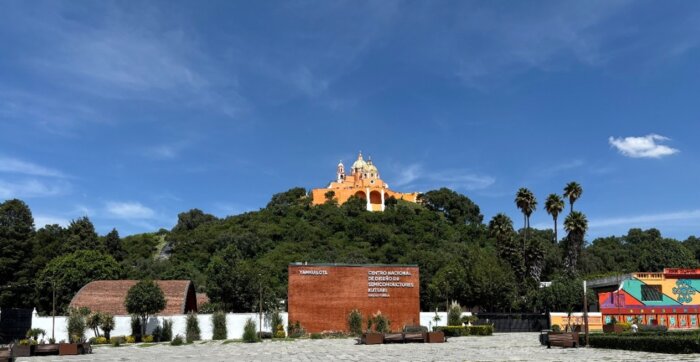
A further strategy they later implemented in their efforts to eliminate paganism entailed the construction of churches and chapels upon the teocalli. [22] Consequently, in Cholula—a sacred settlement replete with worship sites—a substantial number of churches were constructed, with origins dating back to the 16th and 17th centuries. One of the most renowned and distinctive landmarks is the church dedicated to the most venerated Spanish Virgin, Our Lady of Remedies, which was positioned at the summit of the Great Pyramid. [23] Accordingly, the locations that had previously been dedicated to the veneration of pre-Hispanic deities were converted into pilgrimage centers to honor Catholic saints. [24]
_Religious Celebrations as Spatial Resistance: Indigenous Continuity in the Urbanized City of San Andrés Cholula
The municipality of San Andrés Cholula offers a particularly significant case study for examining the contemporary socio-political role of religious syncretism. This is due to the specific way in which ritual practices remain deeply rooted in Indigenous territorial organization and local governance systems. Rather than perceiving these practices as static vestiges of the past, this research conceptualizes religious festivities as dynamic social practices embedded in power relations and urban transformation. For this reason, it is noteworthy that religious celebrations manifested through major community festivals have persisted in San Andrés despite the impact of real estate development and the influx of new residents. In this case, as Chatherine Bell argues, ritual is not merely expressive or symbolic but strategic, operating as a form of social action that produces authority and structures social relations. [26]
It is documented that since pre-Columbian times, the territorial space of Cholula was organized into six districts: Tianguisnáhuac, Mizquitla, Texpolco, Xixitla, Tecama, and Colomoxco. Each of these districts was composed of calpulli, or ‘neighborhoods.’ [27] The neighborhoods were defined as social, religious, political, and economic units that were closely linked to kinship. These territories were further characterized by the presence of dedicated temples and deities, which served as focal points for community life and spiritual practices. [28]
The calpulli survived and adapted to Catholicism, replacing the temple with the church and the pagan gods with a patron saint. This continuity was noted by Aldous Huxley during his visit to Cholula in 1934. Observing the city from the summit of the Great Pyramid, Huxley remarked that the temples described by Hernán Cortés had not disappeared but had been transformed into what he metaphorically described as “mosques” dedicated to Catholic saints. [29] In this sense, the contemporary network of neighborhood churches in San Andrés Cholula represents not a rupture with the pre-Hispanic past, but the spatial and institutional continuity of an Indigenous system of territorial organization in which religious practice remains inseparable from community identity and territorial belonging.
The colonial city of San Andrés Cholula, situated in proximity to the renowned Great Pyramid archaeological site, has been a popular tourist destination for several decades. However, it is now also known for its wide range of student housing, restaurants, and bars that attract a fluctuating population of university students, tourists, and residents of Puebla and other surrounding urban areas, who come here in search of entertainment and recreation. This phenomenon has been further propelled since 1970 by the presence of the Universidad de las Américas Puebla (UDLAP). [30] A university located a few kilometers from downtown San Andrés that attracts students from various regions of the country and worldwide. Concurrently, over the past two decades, there has been an influx of new residents to downtown San Andrés, accompanied by a proliferation of housing developments in the surrounding area, [31] many of which are occupied by foreign residents. [32]
As elucidated in open-ended interviews with Maribel Xicale, Georgina Xicali, and María F. Coatl, [33] this phenomenon has not interrupted or diminished the way Indigenous families conduct their religious events. The celebration of Catholic feast days and the patron saint of the town and neighborhood is indicative of the adherence to religious traditions that have developed since the 16th century. The events share several characteristic features, including their organization by the neighborhood, the lavish adornment of altars with floral arrangements, the presence of saints attired in sumptuous robes, and the staging of pastorelas, which are a genre of pastoral plays accompanied by processions. [34] In this context, interpreted through Pierre Bourdieu’s notion of forms of capital, religious celebrations contribute to the persistence of Indigenous communities in San Andrés Cholula by reinforcing forms of territorial legitimacy that cannot be reduced to legal ownership or economic value. [35]
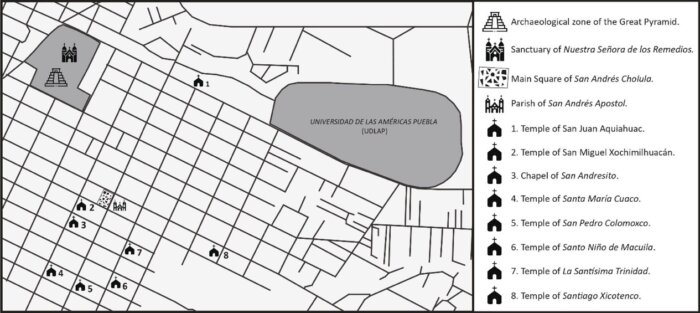
San Andrés Cholula, previously the district of Colomoxco, has maintained a traditional religious organization based on neighborhoods, which remain fundamental units for community and festive life. At present, eight neighborhoods have been identified: San Juan Aquiahuac, San Miguel Xochimilhuacán, San Andresito, Santa María Cuaco, San Pedro Colomoxco, Santo Niño de Macuila, La Santísima Trinidad, and Santiago Xicotenco. Despite the absence of a tangible demarcation that circumscribes the territorial boundaries of these entities, their distinctiveness is discernible through the geographical positioning of their respective temples. [36] These sacred spaces serve not only as sites of veneration for patron saints but also as venues for religious festivities dedicated to central figures of Catholic devotion, such as Virgin Mary, Our Lady of Guadalupe and Jesus Christ. Of equal significance is the fact that these temples serve as venues for various rites of passage, including baptisms, communions, quinceañeras, weddings, and death anniversaries. These events, which are central to the community’s sense of cohesion, are no less significant than major liturgical celebrations in their role in sustaining everyday forms of belonging and neighborhood identity.
The ongoing observance of religious festivals is predominantly attributable to the efforts of the fiscal, who, as María F. Coatl expresses, “in their capacity as an ecclesiastical authority, assumes responsibility for the celebration of all feasts listed in the liturgical calendar.” [42] The fiscal preserves functions that originated in the 16th century, when Franciscan friars appointed Indigenous community members to supervise religious life at the neighborhood level due to the scarcity of clergy and the territorial extension of their jurisdictions. [43] In contemporary San Andrés, the fiscal continues to care for the church through the administration of alms but is also responsible for organizing and funding festivities that extend beyond the temple, including processions and communal meals. [44]
The position of fiscal is held for a period of one year, commencing on January 1 and concluding on December 31. At this juncture, the incumbent fiscal relinquishes their responsibilities to a newly designated fiscal. [45] It is important to note that the individual fulfilling this role within the parish of San Andrés Apóstol is formally designated as a fiscal. In contrast, as María F. Coatl explains, “the individuals who execute this responsibility in the various church locations across different neighborhoods are referred to as síndigos.” [46]
María F. Coatl also notes that “the fiscal or síndigo selects his mayordomos, who are individuals who accept the invitation to assist with the funding and organization of the most significant celebrations of the liturgical calendar.” [47] The average number of mayordomos per temple is approximately ten, although in certain churches this number may be elevated. This phenomenon is collectively referred to as mayordomía. [48] The mayordomía constitutes a significant economic and political institution, with its members being regarded as the moral authorities of the community. During their one-year term, mayordomos engage in the formulation of decisions pertaining to both religious life and local community matters. [49]
In this regard, Roberto Maxil elucidates that, despite his age, he is now considered one of the mayores (elders) in the community, having previously held the most significant ecclesiastical positions in San Andrés. According to him, “when there is an important issue in the Parish or the neighborhood, they call [the mayores] to consult or simply to be present. The presence of individuals with prior experience in fiscal roles, commissioner positions, and mayordomos positions is noteworthy,” [50] as it signifies their capacity to assume these responsibilities, having already demonstrated their competence and experience in these domains. This practice aims to prevent individuals from promoting initiatives that deviate from the customary community practices of San Andrés. Consequently, the mayores assume a pivotal role in the preservation and safeguarding of local traditions, ensuring their continued respect and adherence to them.
The internal organization of mayordomías must be understood in relation to local political power. In San Andrés Cholula, the historical tendency has been for the municipal leadership to remain within the familial lineage of the Indigenous communities in the area, including prominent families such as the Cuautle, Paisano, Coyopol, and Tlatehui. [51] The municipality of San Andrés Cholula was formally recognized as a Republic of Indians in 1714, at which time it was granted the right to elect its own local authorities. [52] In accordance with the regulations established by Charles I of Spain, the governance of Indigenous communities was to be carried out by Indigenous officials. [53] Consequently, the uninterrupted succession of these lineages in local government stands as a testament to the resilience of community-based authority structures.
The preponderance of long-standing residents in public administrative positions has facilitated sustained involvement in political decision-making processes that directly impact the town’s social and territorial organization. In regard to the 2024 municipal election in San Andrés, Roberto Maxil has stated that the political party with which he is affiliated “had effectively lost the race the moment they nominated [Galeazzi as the candidate], because he is not well-known in the community.” [54]
The continuity of Indigenous governance has also had material consequences, such as access to public employment, combined with income derived from renting commercial spaces in an increasingly commodified urban environment. As Georgina Xicale notes, “it is more convenient for me to rent [my commercial space] than to start my own business.” [55] The potential for generating economic income through the rental of commercial spaces and rooms to university students and tourists enabled local families to maintain property ownership and generate the economic resources necessary to finance patron-saint festivities. Consequently, the Indigenous population in San Andrés has established a system of social capital that has made possible access to specific benefits, thereby enabling the conversion of their cultural and symbolic capital into economic capital. [56]
Moreover, the political continuity has promoted the institutional endorsement of religious activities, thereby normalizing the temporary closure of streets for processions and celebrations as an integral component of daily life in San Andrés, rather than as urban disruptions. In the context of rapid urban expansion and real estate speculation, the capacity of long-term residents to remain economically and politically anchored in place, and to publicly occupy urban space through ritual constitutes a subtle yet effective form of resistance to gentrification.
_Case Studies: Christmas Day and Candlemas of the Parish of San Andrés Apóstol and the Celebration of the Patron Saint of Santiago Xicotenco
Religious festivals have been observed to extend into public spaces, with processions, fairs, and temporary markets often being established in the vicinity of temples. Christmas Day is a particularly significant holiday in Catholicism. As is the case in most religious institutions, the temples in this area offer Masses, nativity plays, and community dinners. However, the most significant event in this area takes place at the Parish of San Andrés Apóstol, which is located beside the Zócalo of San Andrés Cholula. Community cohesion and participation are integral components of these celebrations. Fiscal, síndigos, and mayordomos are joined by padrinos and madrinas [godfathers and godmothers], who assist in covering expenses and organizing specific events, such as the Christmas Day procession and the pastorela. [57]
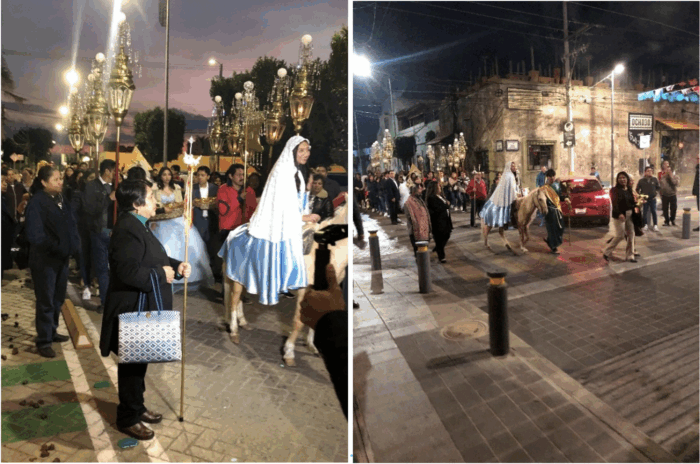
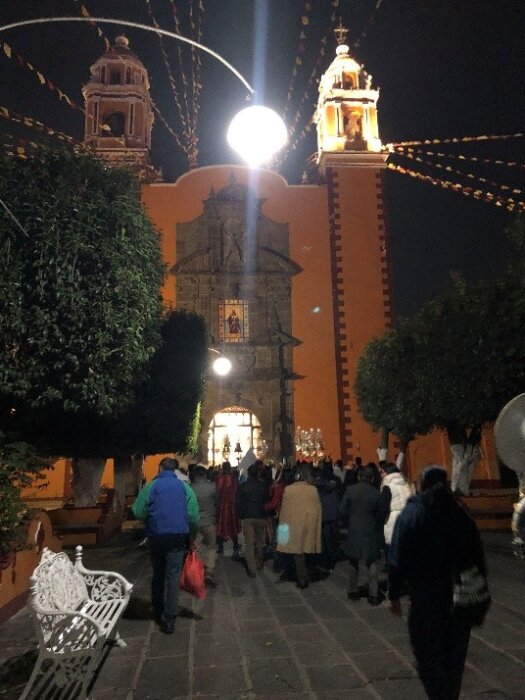
On December 25, a procession is held through the streets of San Andrés Cholula to commemorate the birth of Jesus Christ. The procession is led by a representation of Joseph and Mary, followed by the godmother of the Virgin Mary carrying the Baby Jesus in her arms, accompanied by lanterns lighting the way, and the community walking alongside them. As was the case in pre-Hispanic times, the objective of the procession is for all participants to collectively proceed towards the Eucharist, a celebration that takes place at the parish level.
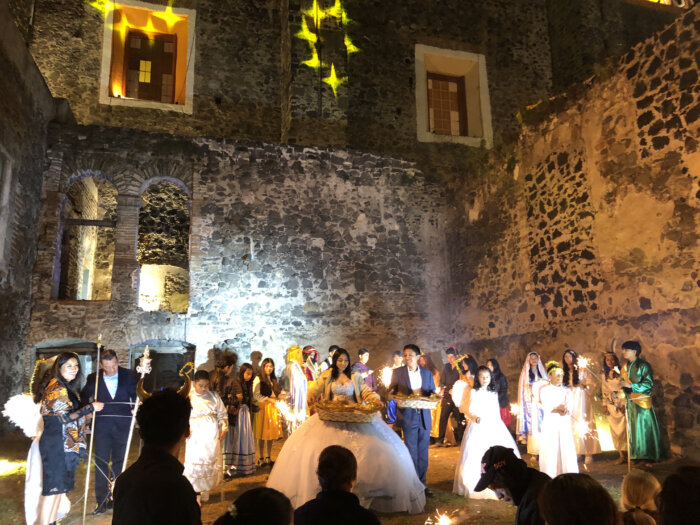
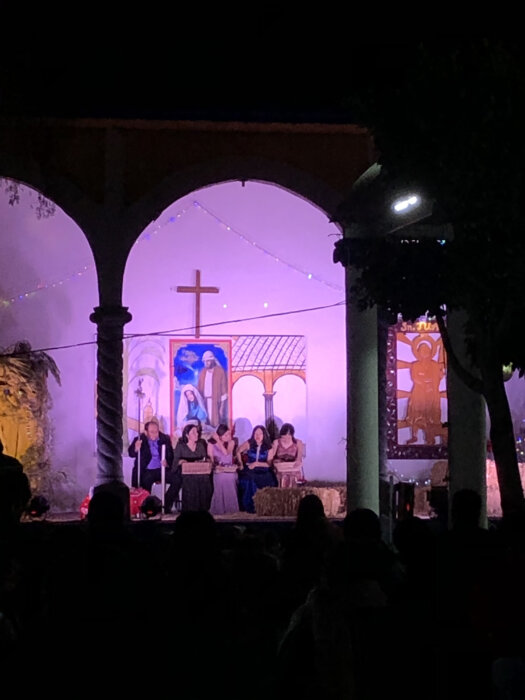
Following the celebration of Mass, the pastorela is performed. This tradition constitutes a significant component of religious syncretism. The pastorela, which include dances and chants, were utilized as a pedagogical instrument to instruct the Indigenous population. These cultural practices were notably promoted by the Jesuit order, which arrived in Mexico in 1572. [61] The pastorela is a theatrical performance that depicts the journey of the shepherds to Bethlehem to meet and worship the Child Jesus. As the narrative progresses, the protagonists encounter the devil, who employs a variety of tactics, including the deployment of traps and temptations, to impede their progress and prevent them from achieving their objective. [62]
In the municipality of San Andrés Cholula, it is customary for all neighborhood temples to perform pastorela on Christmas Day. These performances take place either within the church atrium or in an outdoor area of the church complex. The pastorela is a significant cultural event, as the script is consistently enriched with humor and jokes that satirize contemporary social and political issues. Consequently, each play is endowed with distinctive characteristics and components, contingent on the locale and the performers.
It is customary for young people and children to make up the primary cast of the play. A considerable amount of effort is dedicated to the process of rehearsing lines and acting. This process often spans several weeks, and in some cases, internal castings are held to determine who will play specific roles. [63] The involvement of younger generations is imperative for the continuity of these traditions. From an early age, community members become familiar with these practices and actively participate in them, which contributes to fostering a deep-rooted collective identity and ensures that these customs continue to be reproduced in daily life. This finding is consistent with Bruner’s theory, which posits that traditions acquired during early development are the most resistant to modification. [64]
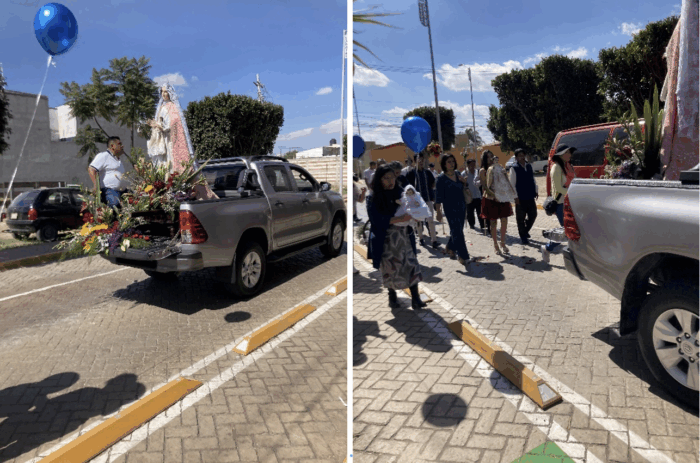
During these processions, residents occupy the streets, thereby transforming urban space into a site of collective visibility. In this sense, the procession functions as both a religious observance and a political and performative act, through which inhabitants reaffirm their connection to public space and to the city. The recurrent nature of these rituals in San Andrés Cholula, uninterrupted over time, has resulted in a high degree of familiarity among the local population, to the point that the presence of official permits, police, or signage is unnecessary for both new residents and visitors to demonstrate respect for the procession’s path, as these practices have become embedded in everyday life and are widely recognized due to their consistency with the liturgical calendar. In accordance with Scott’s conceptualization of “everyday resistance,” [68] it is important to note that these practices do not directly impede property sales or halt urban expansion. Instead, they operate as forms of symbolic and social expressions of resistance. Therefore, resistance does not emerge as a direct opposition to gentrification, but rather as the ongoing reproduction of a social world that exceeds and challenges purely economic logics of urban transformation.
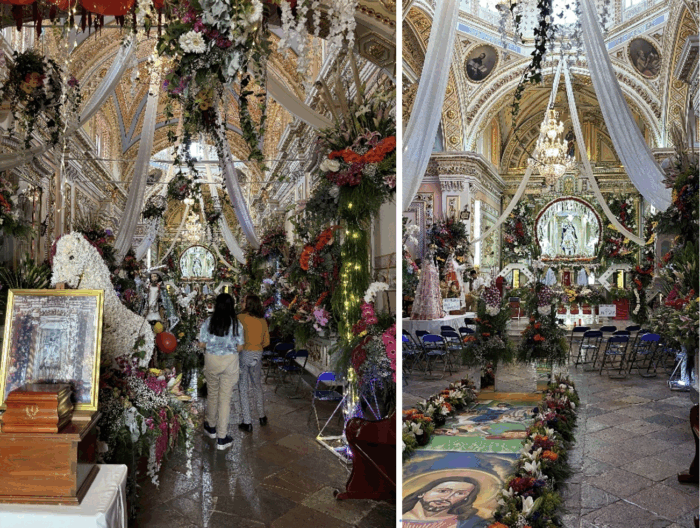
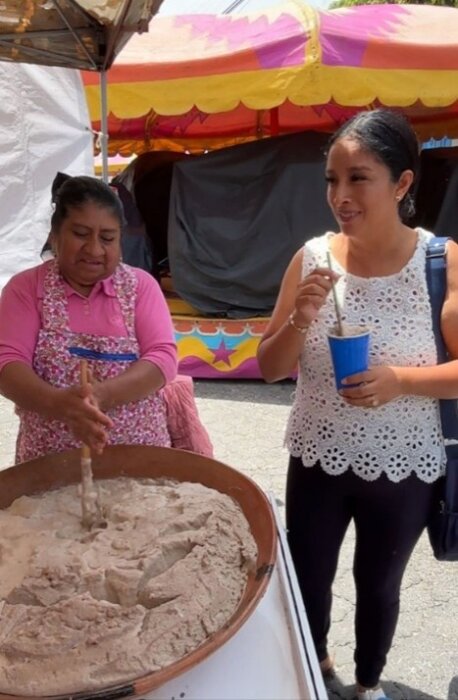
In addition to the Masses and processions dedicated to Jesus Christ and the Virgin Mary—which represent a fundamental part of the religious celebrations in San Andrés—the feast day of each temple’s patron saint is also a significant event for the inhabitants of each neighborhood. On the feast day of the patron saint, commemorative Masses are held, and the church interior is adorned with abundant floral arrangements, fabrics, and sawdust carpets with religious images. In the street, fairs are set up, and food stalls are installed where pre-Hispanic foods can be found, such as espuma de cacao [cacao foam] considered the food or the drink of the gods. The beverage is prepared with toasted blue corn, sugar, cinnamon, cacao, and water. The ingredients are meticulously amalgamated using a wooden implement, known as molinillo. [69]
_Concluding Remarks
The religious festivities observed in San Andrés Cholula represent a multifaceted social phenomenon that cannot be adequately explained by considering only the aspects of faith and tradition. As elaborated in this _Article, these festivities have been adapted and re-signified in response to contemporary socio-urban transformations. Therefore, ritual practices serve as the foundation for the material and political infrastructures that enable Indigenous permanence, despite the ongoing processes of gentrification and territorial dispossession. In accordance with Renya Ramirez’s observations, the ongoing discourse in San Andrés is characterized by a continuous dialogue “between the traditional and modern” elements. [72]
Since the colonial period, religious syncretism has functioned as a mechanism through which Indigenous populations have sought to assert their identity within the context of an imposed religious framework. However, in contemporary San Andrés Cholula, this syncretism has evolved to encompass new dimensions. It does not merely represent a symbolic fusion of Catholic and Indigenous elements; rather, it serves as an active instrument of community continuity. In this context, ritual elements that have been handed down through history are imbued with a sociopolitical function in the present. It has been outlined that dances, processions, festive hierarchies, and community religious offices—such as the fiscal and the mayordomías—are practices that enable traditional neighborhoods to sustain their social and political networks, internal cohesion, and visibility in public space.
This research entailed close observation of the case study, which offered privileged moments for examining the articulation of symbolic resistance. Hence, it can be concluded that the practice of religion in San Andrés Cholula is not limited to the confines of temples; it is also manifested in external activities and interactions. These communities inhabit a variety of public and private spaces, including streets, plazas, homes, atriums, and public spaces. The subjects engage in practices that symbolically and physically demarcate their territory. By engaging in acts of ritual occupation, Indigenous residents assert their right to the city, [73] subtly challenging the neoliberal urban logic that privileges tourism and real estate speculation over collective life.
Consequently, these rituals should be appreciated as dynamic expressions of human existence that adapt and transform in response to evolving material and political circumstances. In the contemporary context, marked by challenges posed by real estate expansion, tourism, and economic interests that threaten to displace historic communities, religious celebration—through processions, festivities, and fairs—also functions as an act of territorial reappropriation that strengthens social and political structures that lead to Indigenous political continuity.
The residents of San Andrés Cholula partake in these events from a position of agency, enabling them to reinterpret and update their cultural heritage. The intricate interplay between tradition and change, between Catholic and Indigenous, is intricately woven into a tapestry of symbolic disputes, shedding light on the multifaceted nature of social life in this city. The present _Article has aimed to initiate a discourse surrounding these tensions and to draw attention to the way religious celebrations function as mechanisms of adaptation and resistance against the forces of neoliberal urbanism that favors market-oriented cultural production. Concluding this analysis does not signify the culmination of the study of a completed phenomenon; rather, it initiates a series of inquiries from multiple perspectives regarding the manner in which Indigenous communities reconfigure their relationship with the city, with their beliefs, and with their history. The religious festivities of San Andrés Cholula continue to serve as a testament to collective identity, a manifestation of cultural resistance, and a tangible way of inhabiting and contesting the city from grassroots perspective.
_Acknowledgements
I would like to express my profound gratitude to Maribel Xicale Coyotl, Georgina Xicali Coyotl, and María Flor Coatl Cuautle for generously sharing their knowledge, welcoming me into their home, and making me feel part of both the community of San Andrés Cholula and their family. Additionally, gratitude is extended to Roberto Maxil Coyopotl for his willingness to participate in this interview and for his generosity in allocating time for it.
_How to Cite

_Endnotes
- [1] Homi K. Bhabha, El lugar de la cultura Homi K. Bhabha, transl. César Aira (Buenos Aires: Manantial, 2013), 18.
- [2] Victor Witter Turner, El proceso ritual: estructura y antiestructura, transl. Beatriz García Ríos (Madrid: Taurus, 1988), 104.
- [3] Renya K. Ramirez, Native Hubs: Culture, Community, and Belonging in Silicon Valley and Beyond (Durham/London: Duke University Press, 2007), 143.
- [4] Sharon Zukin, Naked City: The Death and Life of Authentic Urban Places (Oxford: Oxford University Press, 2010), 3–4. <https://doi.org/10.1093/oso/9780195382853.001.0001>.
- [5] David Harvey, Espacios del capital: hacia una geografía crítica, transl. Cristina Piña Aldao (Madrid: Akal Ediciones, S.A., 2014), 417–418.
- [6] Arjun Appadurai, “Grassroots Globalization and the Research Imagination,” in Globalization, ed. Arjun Appadurai (Durham: Duke University Press, 2001), 17, <http://dx.doi.org/10.1215/9780822383215>.
- [7] Turner, El proceso ritual; Catherine Bell, Ritual Theory, Ritual Practice (Oxford: Oxford University Press, 1992); James C. Scott, Los dominados y el arte de la resistencia, transl. Jorge Aguilar Mora (México, D.F.: Era, 2004); Ramirez, Native Hubs; Edward M. Bruner, “Cultural Transmission and Cultural Change,” Southwestern Journal of Anthropology 12, no. 2 (1956): 191–199, here: 194.
- [8] Pierre Bourdieu, Poder, derecho y clases sociales, transl. Ma. José Bernuz Beneitez, Andrés García Inda, Ma. José González Ordovás, Daniel Oliver Lalana (Bilbao: Editorial Desclée de Brouwer, 2001).
- [9] Zukin, Naked City.
- [10] Henri Lefebvre, La producción del espacio, transl. Emilio Martínez Gutiérrez (Madrid: Capitán Swing Libros, 2013).
- [11] Maribel Xicale and Georgina Xicali are sisters, with ages 47 and 57, respectively. María F. Coatl is married to their brother, whose age was not disclosed. Roberto Maxil is 45 years old and is a member of the Xicali family, which is connected to the extended family of Maribel and Georgina through marriage.
- [12] INAH, “Zona arqueológica Cholula,” Gubernamental, INAH, August 25, 2022, <https://www.inah.gob.mx/zonas/zona-arqueologica-de-cholula>.
- [13] Mediateca INAH, “Cholula. Lugar de huida,” Gubernamental, Mediateca—Instituto Nacional de Antropología e Historia, accessed August 25, 2025, <https://mediateca.inah.gob.mx/islandora_74/islandora/object/sitioprehispanico%3A1301>.
- [14] Sergio Suárez and Silvia Martínez, “Breve historia de la arqueología de Cholula, Puebla,” Antropología. Revista interdisciplinaria del INAH 78 (2005): 87.
- [15] Gabriel Kruell, “Cholula, ciudad santuario de Mesoamérica,” Educativa, Noticonquista, accessed August 25, 2025, <http://www.noticonquista.unam.mx/amoxtli/1753/1749>.
- [16] Mediateca INAH, “Cholula. Lugar de huida.”
- [17] Mediateca INAH, “Cholula. Lugar de huida.”
- [18] Michael Lind, “La gran cuadra de la ciudad: El gobierno prehispánico de Cholula,” Arqueología, 2008, 70.
- [19] Adriana Armenta-Ramírez, “Mapa de ubicación Cholollan, ciudad de puebla y de los municipios de San Andrés Cholula, San Pedro Cholula y Puebla,” August 25, 2025.
- [20] William Madsen, “Sincretismo religioso en México,” in Cambio religioso y dominación cultural: El impacto del Islam y del Cristianismo, ed. David Lorenzen (México: El Colegio de México, 1982), 139–140.
- [21] Madsen, “Sincretismo religioso en México,” 140.
- [22] Francisco de la Maza, La ciudad de Cholula y sus iglesias (México: Imprenta Universitaria, 1959), 17, <https://biblio.esteticas.unam.mx/items/show/8>.
- [23] De la Maza, La ciudad de Cholula y sus iglesias, 102.
- [24] Madsen, “Sincretismo religioso en México,” 152.
- [25] Adriana Armenta-Ramírez, Fotografía que muestra El Tlachihualtépetl y El Santuario de Nuestra Señora de Los Remedios en su cima, photograph, August 29, 2025.
- [26] Bell, Ritual Theory, Ritual Practice, 71–72.
- [27] Lind, “La gran cuadra de la ciudad,” 68.
- [28] Rojas cit. in Lind, “La gran cuadra de la ciudad,” 68.
- [29] De la Maza, La ciudad de Cholula y sus iglesias, 58.
- [30] serviciosweb, “La UDLAP cumple 80 años de excelencia y 50 años de su establecimiento en San Andrés Cholula,” Universitaria, Blog UDLAP, October 12, 2020, <https://blog.udlap.mx/blog/2020/10/12/la-udlap-cumple-8-decadas-de-excelencia-y-5-decadas-de-su-establecimiento-en-san-andres-cholula/>.
- [31] Maritza Mena, “Anárquico, el crecimiento urbano en San Andrés Cholula,” in Periódico en línea, el sol de puebla, June 15, 2017, <https://oem.com.mx/elsoldepuebla/local/anarquico-el-crecimiento-urbano-en-san-andres-cholula-19499146>.
- [32] Hernández Daniela, “San Andrés Cholula, el más atractivo para los extranjeros y con mayor diversidad,” in Periódico en línea, el sol de puebla, July 16, 2024, <https://oem.com.mx/elsoldepuebla/local/san-andres-cholula-el-mas-atractivo-para-los-extranjeros-y-con-mayor-diversidad-13896675>.
- [33] Maribel Xicale, “Diálogo sobre las posadas navideñas,” interview by Adriana Armenta-Ramírez, transl. Adriana Armenta-Ramírez, December 18, 2020; Georgina Xicali, “Interview with Georgina Xicali Coyotl, Native Resident of the San Juan Neighborhood of San Andrés Cholula,” interview by Adriana Armenta-Ramírez, transl. Adriana Armenta-Ramírez, August 29, 2025; Flor Coatl, “Interview with María Flor Coatl Cuautle, Native Resident of San Andrés Cholula, on the Organization of Religious Festivities,” interview by Adriana Armenta-Ramírez, transl. Adriana Armenta-Ramírez, August 29, 2025.
- [34] Madsen, “Sincretismo religioso en México,” 152.
- [35] Bourdieu, Poder, derecho y clases sociales, 150.
- [36] Xicale, “Interview with Georgina Xicali Coyotl, Native Resident of the San Juan Neighborhood of San Andrés Cholula.”
- [37] Adriana Armenta-Ramírez, Mapa de ubicación de los 8 templos de los barrios originarios de San Andrés Cholula, Puebla, México, map, August 25, 2025.
- [38] Xicale, “Diálogo sobre las posadas navideñas.”
- [39] Coatl, “Interview with María Flor Coatl Cuautle, Native Resident of San Andrés Cholula, on the Organization of Religious Festivities.”
- [40] Turner, El proceso ritual, 103.
- [41] Bourdieu, Poder, derecho y clases sociales, 148.
- [42] Coatl, “Interview with María Flor Coatl Cuautle.”
- [43] Robert Ricard, La conquista espiritual de México, transl. Ángel M. Garibay (México D.F.: Fondo de Cultura Económica, 2014), 150.
- [44] Coatl, “Interview with María Flor Coatl Cuautle.”
- [45] Coatl, “Interview with María Flor Coatl Cuautle.”
- [46] Xicale, “Interview with Georgina Xicali Coyotl”; Coatl, “Interview with María Flor Coatl Cuautle.”
- [47] Coatl, “Interview with María Flor Coatl Cuautle.”
- [48] Coatl, “Interview with María Flor Coatl Cuautle.”
- [49] Manuel Tlatoa and Alejandra Gámez, “Mayordomías, circulares, mayores y menores en San Pedro Cholula. Una tipología general,” in Fiestas patronales barriales en la ciudad dual de Cholula (Benemérita Universidad Autónoma de Puebla: Facultad de Filosofía y Letras, 2019), 301–326, here: 303.
- [50] Roberto Maxil Coyopotl, “Interview with Roberto Maxil Coyopotl,” interview by Adriana Armenta-Ramírez, transl. Adriana Armenta-Ramírez, March 3, 2026.
- [51] “Municipio de San Andrés Cholula,” Wikipedia, accessed February 24, 2026, <https://es.wikipedia.org/w/index.php?title=Municipio_de_San_Andr%C3%A9s_Cholula&oldid=172220446>.
- [52] Jesús Tamayo, “Cholula: fragmentación y resiliencia territorial,” in Periódico en línea, reto diario, August 12, 2024, <https://retodiario.com/columna/cholula-fragmentacion-y-resiliencia-territorial/>.
- [53] RAE, “Definición de república de indios—Diccionario panhispánico del español jurídico—RAE,” Diccionario panhispánico del español jurídico—Real Academia Española, accessed March 7, 2026, <https://dpej.rae.es/lema/rep%C3%BAblica-de-indios>.
- [54] Roberto Maxil, “Interview with Roberto Maxil,” interview by Adriana Armenta-Ramírez, transl. Adriana Armenta-Ramírez, March 3, 2026.
- [55] Xicale, “Interview with Georgina Xicali Coyotl.”
- [56] Bourdieu, Poder, derecho y clases sociales, 151.
- [57] Coatl, “Interview with María Flor Coatl Cuautle.”
- [58] Adriana Armenta-Ramírez, Fotografía de la procesión del nacimiento de Jesucristo de la Parroquia de San Andrés Apóstol, photograph, December 25, 2023.
- [59] Adriana Armenta-Ramírez, Fotografía de la procesión que llega al Templo de San Andrés Apóstol el día de Navidad, photograph, December 25, 2023.
- [60] Lefebvre, La producción del espacio, 98, 99.
- [61] Josselin Melara, “¿Qué son las pastorelas y cuál es su origen? Especial de Navidad,” Diocesis Azcapotzalco, December 22, 2024, <https://diocesisazcapotzalco.org/que-son-las-pastorelas-y-cual-es-su-origen-especial-de-navidad/>.
- [62] Secretaría de Cultura, “Las fiestas navideñas, expresiones de sincretismo, comunidad e identidad,” Gubernamental, Gobierno de México, December 22, 2017, <http://www.gob.mx/cultura/prensa/las-fiestas-navidenas-expresiones-de-sincretismo-comunidad-e-identidad?idiom=es-MX>.
- [63] Maribel Xicale, “Christmas Day Interview: Maribel Xicale Coyotl,” interview by Adriana Armenta-Ramírez, transl. Adriana Armenta-Ramírez, December 25, 2024.
- [64] Bruner, “Cultural Transmission and Cultural Change,” 194.
- [65] Adriana Armenta-Ramírez, Fotografía de la pastorela realizada en la Parroquia de San Andrés Apóstol, photograph, December 25, 2023.
- [66] Adriana Armenta-Ramírez, Fotografía de la pastorela del Templo de San Juan Aquiahuac, photograph, December 25, 2019, 7.
- [67] Victor J. Santos, “A propósito del Día de la Candelaria,” Gubernamental, INAH, January 29, 2025, <https://inah.gob.mx/especiales-inah/articulos/a-proposito-del-dia-de-la-candelaria>.
- [68] Scott, Los dominados y el arte de la resistencia, 112, 113.
- [69] Luisa Tirzo, “Espuma de cacao: ‘Bebida de los dioses’ en Las Cholulas, Puebla,” in MTP Noticias, February 17, 2023, <https://mtpnoticias.com/donde-ir/espuma-de-cacao-bebida-de-los-dioses-en-las-cholulas-puebla/>.
- [70] Adriana Armenta-Ramírez, Fotografía que muestra el interior del templo de Santiago Xicotenco en su día de fiesta,” photograph, July 25, 2024.
- [71] Adriana Armenta-Ramírez, Fotografía de la feria del patrón Santiago Xicotenco, photograph, July 25, 2024.
- [72] Ramirez, Native Hubs, 1.
- [73] Henri Lefebvre, El derecho a la ciudad, transl. J. González Pueyo (Ediciones Península, 1978), 167.
- [74] Adriana Armenta-Ramírez, Fotografía que muestra a Flor Coatl Cuautle y Georgina Xicali Coyotl, photograph, August 29, 2025.